How organic bioslurry fertiliser doubled yields in Uganda
The content of this page has been checked on 16 March 2026
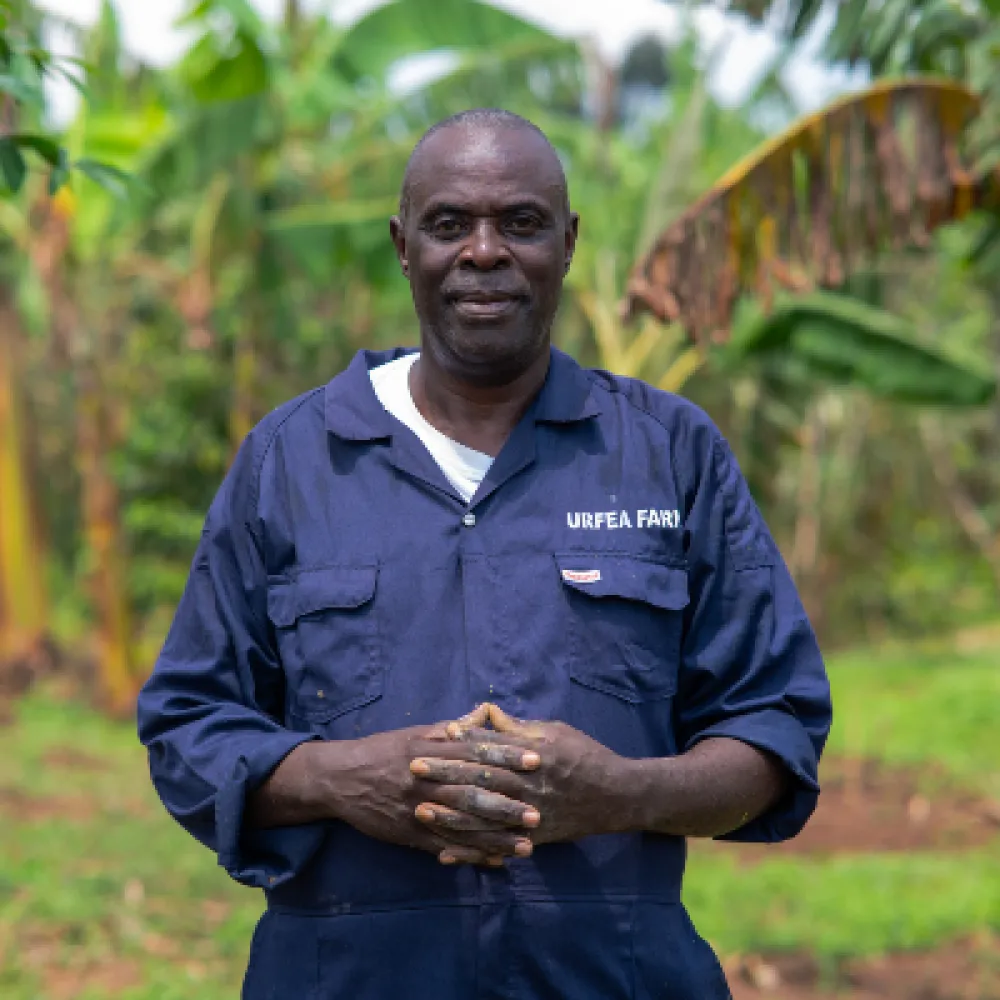
Across Uganda, farmers are discovering how clean energy technology can also help their soil and feed their families. Farmers use animal waste to make biogas for cooking and bioslurry to fertilise crops. It improves food security, increases incomes and protects the environment. Kateera Muhanguzi is one such farmer. His banana plantation in Uganda shows strong resilience and productivity.
Surviving the storm
A recent hailstorm destroyed his community's main source of food and income: banana plantations. Farmers cut down the banana trees. The surviving plants produced bananas that ripened too soon, before harvest was possible. As a result, many families were left with nothing. But for Kateera, the storm had a different outcome.
"Because we were using bioslurry, we had some bananas left in the plantation. And even some beans. I did not lose much since I picked the bananas early and ripened them for wine making," Kateera explains.
While other farmers struggled with poor yields and empty fields, Kateera's crops stayed healthy and productive.
Doubling yields with bioslurry
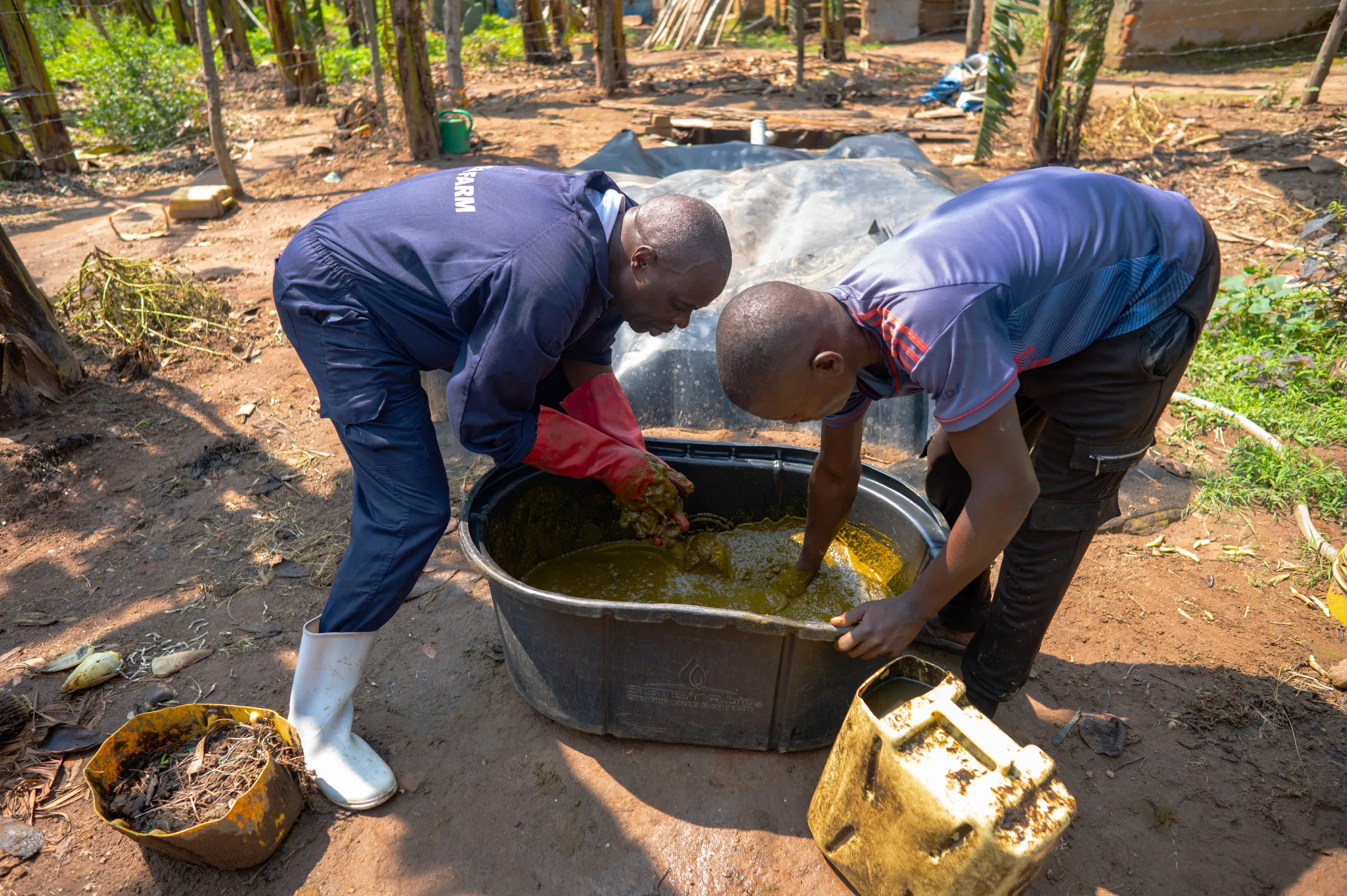
Bioslurry, a nutrient-rich, liquid by-product left after animal waste is broken down in a biodigester to create biogas, has transformed Kateera's farm.
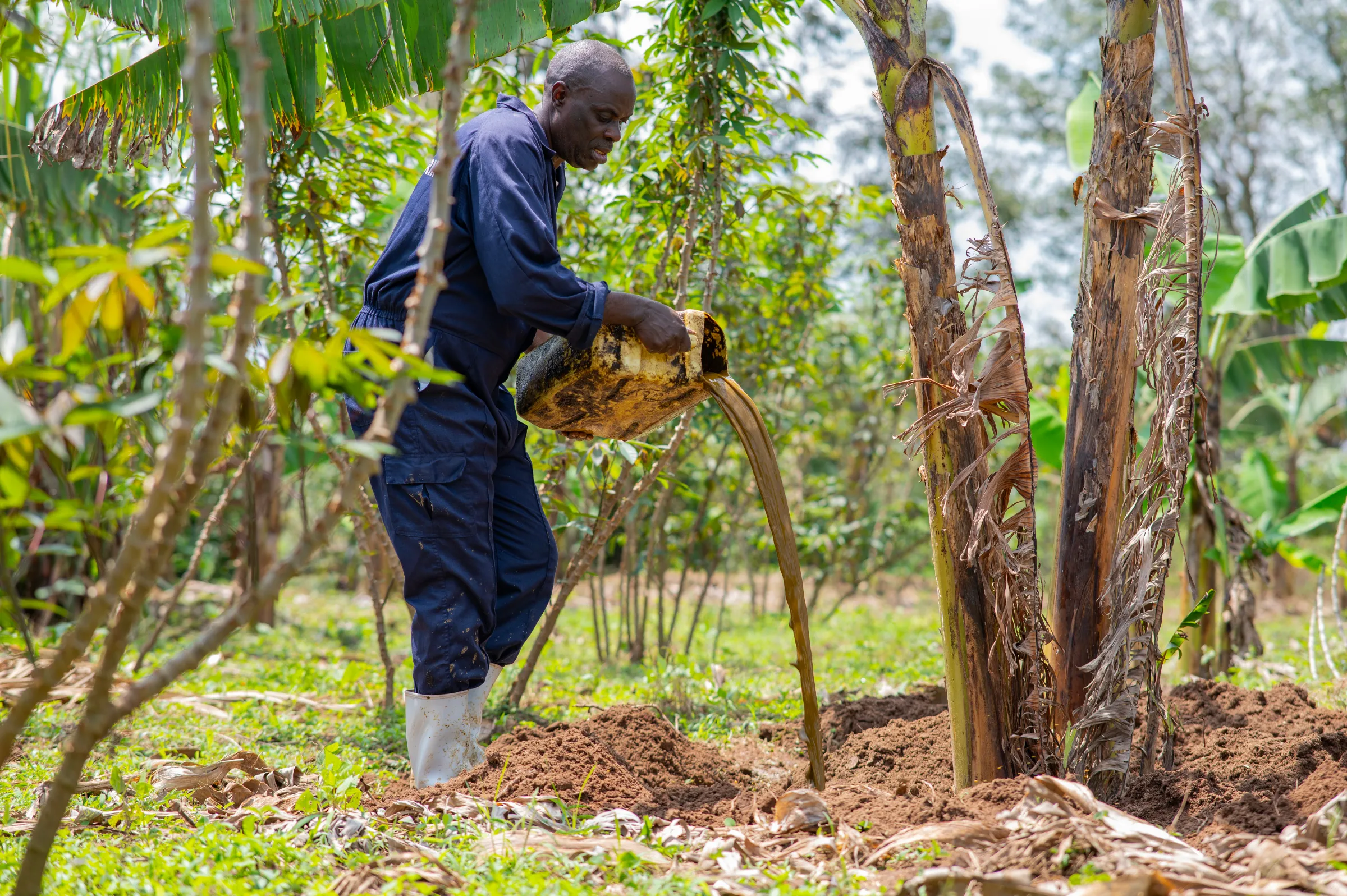
"You can get 4 matooke plants from just one original plant, which was impossible before we used bioslurry. The matooke also grows faster and heavier. We used to harvest bunches weighing 20–25 kilograms, but now they weigh 25–40 kilograms," he says proudly.
Bioslurry has a huge impact on productivity. It enriches soil naturally, doubling Kateera's yields and making his crops more resilient to drought and hail.
Adding value to matooke: From bananas to wine
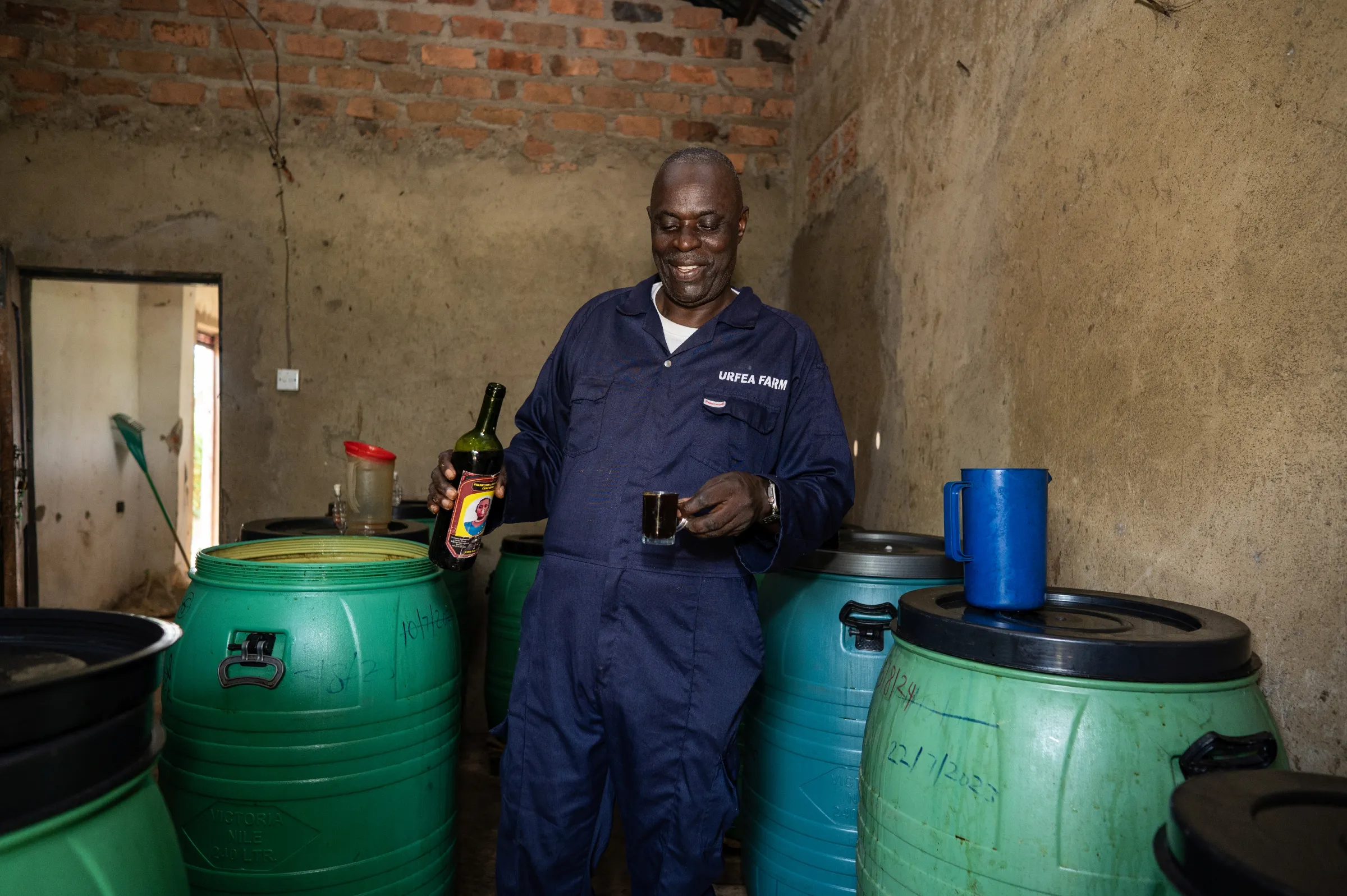
Unlike many other farmers, Kateera does not sell bananas directly. He adds value by making banana wine. This is a very popular product in his community, especially for weddings and traditional marriage ceremonies.
"We used to get 1 jerrycan of wine from one bunch of matooke, now we get 2. I sell each bottle for 10,000 Ugandan shillings (UGX). Each drum holds 300 bottles and takes 5 bunches to make, selling for UGX 3 million. So, I earn about UGX 600,000 (143 euros) from each bunch," he explains.
Selling a bunch directly would bring only UGX 15,000 to 40,000, depending on the season. Today, with just one acre, Kateera makes wine worth UGX 200 to 300 million each year, thanks to bioslurry.
"Even with little land, you can grow matooke for making money," he says. "When I have extra bioslurry, I can sell it. But I usually give it to my neighbours for free, so I can later buy matooke from them for more wine-making."
Kateera's business also creates jobs. He now employs 5 full-time workers.
Cleaner cooking, healthier homes
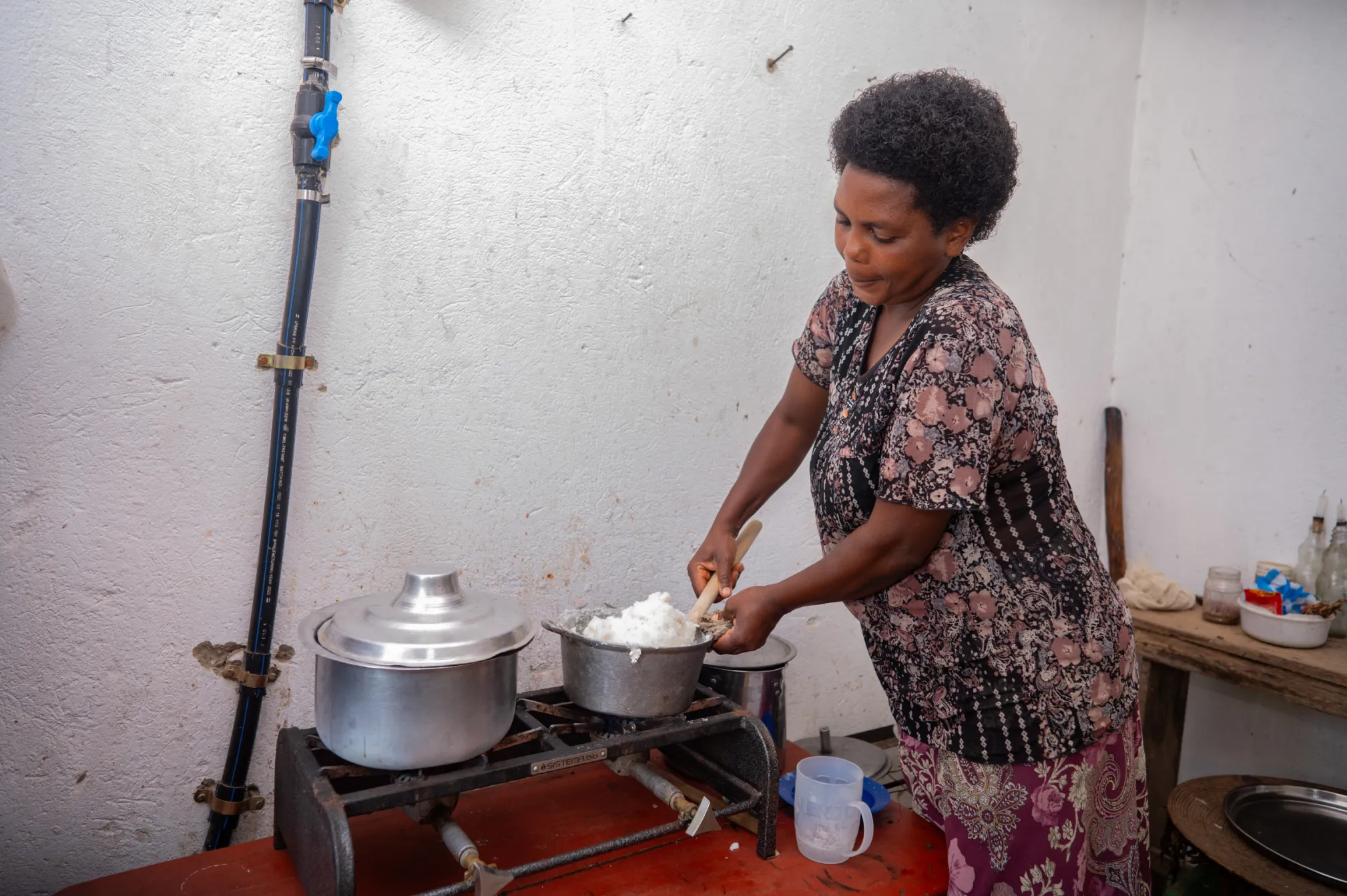
The biodigester helps more than the farm itself. For Kateera's wife, Moneth Aryatusinguza, it improved her health by eliminating the need to cook with firewood.
"Smoke used to give me headaches all the time. Since installing the biodigester, we have enough biogas for cooking and never use firewood anymore," she says.
This shift to clean energy means fewer trees cut for firewood, less indoor air pollution, and more time for other household activities.
Inspiring neighbours and transforming the community
Kateera's success has inspired others in his village: 16 households have installed their own biodigesters after seeing the benefits.
"I hope everyone will see what biogas can do. I now train and show people, so they can learn. With more matooke, we can build a wine factory!"
A simple effort to fertilise crops became a story of innovation and hope. For Kateera and his neighbours, biogas technology has become more than an energy source. It is the foundation of a stronger, cleaner and more food-secure future.
The African Biodigester Component (ABC) programme
This story is the result of one of the projects under the African Biodigester Component (ABC) programme. ABC supports the growth and sustainability of the commercial biogas sector in Sub-Saharan Africa. It is part of the Strengthening the Entrepreneurial Ecosystem for Clean Cooking programme.
Questions?
Would you like to learn more about projects like this? Visit our Development Cooperation Project database or email us.
- Ministry of Foreign Affairs