Recreational fishing in coastal waters, sea area, and the Dutch Visserijzone
The content of this page has been checked on 17 August 2026
Are you a recreational fisher and do you (want to) fish in the Dutch coastal waters, the sea area, or the Visserijzone (Fisheries Zone)? Then, specific rules apply. For example, for the fishing gear that you may use. You may also only use caught fish for personal use. You are not allowed to sell them.
 Stay informed via email
Am I a recreational fisher?
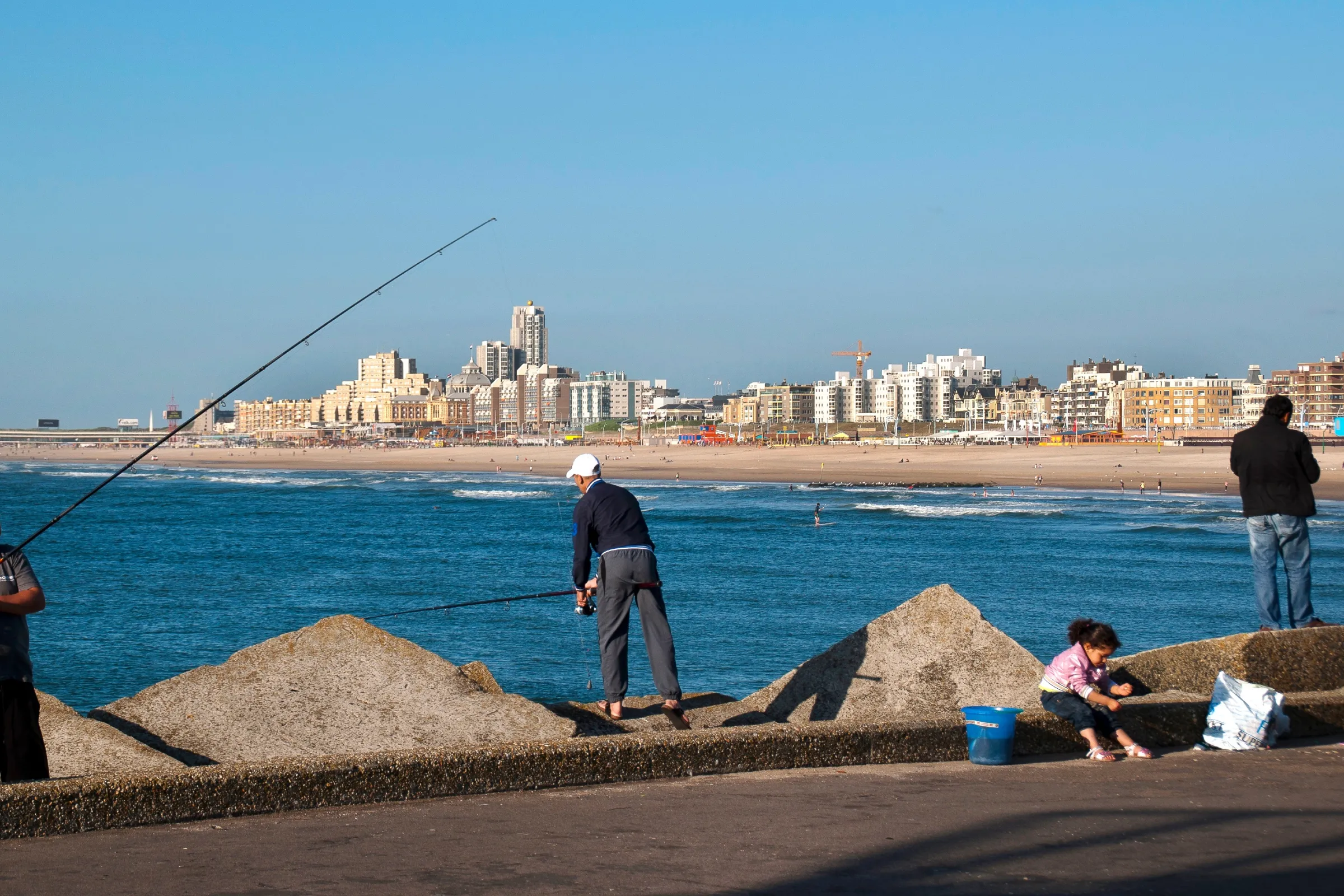
You are a recreational fisher if you fish for non-commercial purposes. This means that you do not sell or give away your catch. It does not matter if you fish often or only occasionally. Sport fishers also fall under this category.
Register your catch with the RecFishing app
The European Commission (EC) has developed an app for recreational saltwater fishing: RecFishing. Do you fish recreationally in the Dutch coastal waters, the sea area, or the Visserijzone? and are you 14 years of age or older? Then you must always register yourself in this app. You also have to do this if you are already registered with a sport fishing or angling association. When you are fishing, supervisors may ask you to show your app registration on your mobile phone.
From 2026 onwards, it is mandatory to register catches of the following fish species in the app:
- European seabass (BSS)
- bluefin tuna (BFT)
- European eel (ELE)
If you have caught a different species of fish, you may also register this in the app. But this is not mandatory. However, you do need to be registered in the app yourself at all times.
Are you unable to register your catches in the app? You may also do this at a later time, up to 24 hours after your catches.
You can download the app for free on the App Store (iOS) and Google Play (Android).
Why register catches in an app?
Why register catches in an app?
From 2026, new European rules apply to recreational fishing in coastal waters, the sea area and the Visserijzone. By registering your catches of certain fish species in the app, we can better assess how these vulnerable species are faring. How many of these fish are there in the area? And how large are they? The information you provide, helps us to monitor how the species are doing over time.
We all want fish populations in the sea to remain healthy. Now, but also in the future. To achieve this, we need a clear and reliable picture of all fishing activities across the European Union. Not only of the fishing activities of commercial fishing, but also of recreational fishing.
Creating an account
Creating an account
When you use the app for the first time, you create an EU Login account. Enter your name and e-mail address and choose a password. You need an internet connection to create an account.
You can find more information about creating an account on the website of the European Union.
What information do you register in the app?
What information do you register in the app?
When you start fishing, open the app and tap on 'Start fishing session'. The app then determines your location. Does it show an incorrect location? You can alter the location yourself. The app determines your location in an area of 55 by 55 kilometres. The app does not share your exact location.
Have you caught a sea bass, bluefin tuna or European eel? Then you need to register the following information:
- the species of fish that you have caught
- the number of fish of this species you have caught
- the fishing gear that you used (for example: rod)
- from where you were fishing (coast, vessel, ice, underwater)
- the length and/or weight of the fish (in centimetres and/or kilograms)
- whether you kept the fish or released it
- where you have caught the fish
- the date and time of your catch
Recreational fishing in another EU country
Recreational fishing in another EU country
Are you going to fish recreationally in salt waters in another EU country? From 2026, you must also use an app there to register the fish species that you catch. These species may differ from those in the Netherlands. Many other EU countries also use the RecFishing app, but not all.
EU countries with the RecFishing app
You also use the RecFishing app if you fish in salt waters in the following countries:
- Belgium
- Cyprus
- Denmark
- France
- Germany
- Ireland
- Italy
- Malta
- Poland
- Portugal
- Romania
- Sweden
You can find more information about recreational fishing in these countries in the app. In the menu, click on More and then on the page Read more about fisheries legislation.
EU countries without the RecFishing app
Are you going to fish in an EU country that does not use the RecFishing app? Then check locally how you need to register your catches and which species you must register.
Fishing locations
Different rules apply to the coastal waters, the sea area, and the Dutch Visserijzone. You can find which areas fall under the coastal waters, the sea area, and the Dutch Visserijzone on Overview of sea, coastal and inland waters and the Dutch Visserijzone.
Catch limits
There are catch limits for cod, seabass, bluefin tuna and eel in all the fishing locations:
Cod
- You are allowed to have a maximum of 25 cods or 20 kilograms of cod with you.
Seabass
- You are only allowed to catch and take up to 3 seabasses with you per day in January and from 1 April to 31 December. These seabasses must be at least 42 cm in length each.
- From 1 February to 31 March, fishing for seabass is prohibited. If you catch one accidentally in this period, you must release it immediately. You must still register your catch (and release) in the app.
Bluefin tuna
- Have you caught a bluefin tuna? Then you must release it immediately. You will have to register your catch in the app.
- Is the bluefin tuna that you have caught dead? Then you report this after you have registered your catch in the app. You can do this by sending an email to recreatievevisserij@rvo.nl.
European eel
- Have you caught a European eel? Then you must release it immediately. You still have to register your catch in the app.
Rules for fishing gear
When fishing in coastal waters, the sea area, or the Visserijzone, you may only use the following fishing gear:
- rod
- beam trawl
- otter trawl
- set gillnets
The regulations in each area depend on the fishing gear that you use.
Fishing rod
Fishing rod
- In the coastal waters and the sea area you may use 2 rods per person maximum.
- Each rod may have up to 3 hooks.
- Fishing for European eel is prohibited. Have you caught a European eel by accident? You must release it back into the water. You must still register your catch (and release) in the app.
Beam trawl
Beam trawl
- You may only use a beam trawl in the Visserijzone, the sea area, and the Westerschelde.
- The vessel that you use has a maximum length of 8 metres.
- The vessel that you use has one single beam trawl, with a maximum length of 150 centimetres.
- Did you catch one of the fish species listed in annex 1 of the Fishing opportunities regulation with a beam trawl? Then, you must always release it. This only applies to the fish species listed in annex 1.
- Are you fishing for shrimp? Then you must follow certain rules for small-scale shrimp fishing. You can find more information about this on Vissen zonder garnalenvergunning (in Dutch).
Otter trawl
Otter trawl
- You may only use an otter trawl in the Visserijzone, sea area, and the Westerschelde.
- The vessel that you use has a maximum length of 10 metres.
- The vessel that you use has one single net. The plates are no higher than 70 centimetres. This is measured from the backside from the one plate to the backside from the other plate.
- Did you catch one of the fish species listed in annex 1 of the Fishing opportunities regulation with an otter trawl? Then, you must always release it. This only applies to the fish species listed in annex 1.
- Are you fishing for shrimp? Then you must follow certain rules for small-scale shrimp fishing. You can find more information about this on Vissen zonder garnalenvergunning (in Dutch).
Set gillnets
Set gillnets
Fishing with fixed gear in the sea area, the Visserijzone, or the coastal waters is generally not allowed. However, there are some exceptions to fishing with set gillnets.
Exception for set gillnets in coastal waters
In some parts of the coastal waters, you may use set gillnets if you register with the local municipality each year. You must also follow these rules:
- Not all areas are allowed, see Annex 17 of the Uitvoeringsregeling Visserij (Fisheries Regulation).
- You may use only one net per person.
- The net has a maximum length of 30 metres. In some areas around the Wadden Sea you may use a net with a length up to 100 metres. You can see which areas these are in Annex 18 of the Uitvoeringsregeling Visserij.
- The net must have floats.
- At low tides, the net must lie on the seabed.
- The municipality will assign a number to you. You will attach this sign on the fishing gear. The number must be clearly visible above all water levels.
- Fishing for seabass with set gillnets is prohibited. Have you caught a seabass by accident? Then you will release it back into the water. From 10 January 2026, you must then still record in the app that you have caught (and released) a seabass.
Exceptions for set gillnets in some municipalities in the Visserijzone
The following municipalities allow set gillnet fishing in the Visserijzone:
- Ameland
- Katwijk
- Schagen
- Schiermonnikoog
- Terschelling
- Texel
- Vlieland
- Westland
- Zandvoort
Applying for exemption and rules
Do you wish to fish with set gillnets in these municipalities? Then you must request permission from the municipality in which you want to fish. You can find more information about this on the website of the respective municipality.
Furthermore, you will follow these rules:
- You may use one gillnet per person. You must reapply for permission every year.
- The municipality will assign a number to you. You will attach this sign on the fishing gear. The number must be clearly visible above all water levels.
- Check your gear at least once every 24 hours.
- Report the bycatch of harbour porpoises to the municipality.
- Fishing for seabass with set gillnets is prohibited. Have you caught a seabass by accident? Then you will release it back into the water. From 10 January 2026, you must then still record in the app that you have caught (and released) a seabass.
Terms for net
These municipalities also set requirements to the net that you are using:
- The minimum mesh size is 105 millimetres (stretched).
- The net is single-layered.
- The maximum net length is 50 metres.
- The maximum net height is 110 centimetres (stretched).
- The net is anchored to the seabed. You will attach the upper line to the anchoring. You will do this no more than 65 centimetres above the bottom.
- The net will be placed between high and low tide lines.
Sometimes the municipality in which you want to fish may have additional conditions. You can inquire if there are any additional conditions with the municipality.
New regulations for gillnet markings
Do you intend to fish recreationally with a gillnet? Then, from 10 January 2026 new rules apply for the markings:
- Mark the top row of the net with a clearly visible tag or plate.
- Mark the buoys clearly and permanently.
- Use durable materials.
- Make sure that the markings are always clearly visible above the water.
Thanks to clearly visible markings we can determine who is the owner of the gillnet. Or who utilises it.
Shellfish harvesting
If you are harvesting shellfish for personal use, you may collect up to 10 kilograms per person per day. This total includes mussels, oysters, cockles, periwinkles, and other shellfish. For example: 2 kilograms mussels, 2 kilograms oysters, 1 kilogram cockles, and 5 kilograms periwinkles.
Where and when
You may harvest only outside commercial mussel and oyster plots, in areas accessible at low tide, between one hour before sunrise and one hour after sunset.
To collect shellfish on a plot, its owner needs permission from us. You can find more information about this on Vissen op schelpdieren (in Dutch).
Always check the rules in the area where you are harvesting.
Frequently asked questions
I do not have a smartphone. How can I register my catches?
I do not have a smartphone. How can I register my catches?
The European Commission is working on a version of the app for the computer. Until this version is finished, you can download the free app to the smartphone of a family member, friend or acquaintance. You can create your own account and register your catches on that smartphone.
Are you going fishing? Then you need proof of registration to show to enforcers. That way, they will know that you are abiding by the rules. You can create a proof of registration by opening the app and clicking on Profile. Then, make a screenshot. You then email this screenshot to yourself and print it. Bring this printed proof of registration when you go fishing.
I have accidentally registered a catch incorrectly. What do I do?
I have accidentally registered a catch incorrectly. What do I do?
You cannot change this yourself. Send an email to recreatievevisserij@rvo.nl. Send us the following information in your email:
- The email address with which you are registered in the app.
- The date of your catch.
- Which species of fish you have caught.
- What we need to change in your registration.
Why do I also need to register catches which I have released?
Why do I also need to register catches which I have released?
You only need to register your catch if you have caught European seabass, bluefin tuna, or European eel. These are vulnerable species. Therefore, we want to protect them as well as possible. We are better able to do this when we know how often fish of these species are caught. Including when they are released back into the sea.
Example
During a fishing session, you have caught 7 seabasses. You have kept 3. You have released the other 4 back into the sea.
If you only register the seabass that you have kept, it will appear to us that you encountered only 3 seabasses during your fishing session. Making it look like there is less seabass than there actually is. If you register all 7 seabasses, we know that there are more seabasses in the area. This way, we can monitor how vulnerable species are doing.
I want to register my catches after finishing my fishing session. How do I do that?
I want to register my catches after finishing my fishing session. How do I do that?
You can do this up to 24 hours after the catch. Follow these steps:
- Open the RecFishing app.
- Start a new fishing session.
- Tap the down arrow next to Started on, then enter the correct time.
- Register your catch and the time of the catch.
- End the fishing session.
It does not matter if the fishing session you entered lasted shorter than your actual fishing session.
Do I have to register all my catches in one fishing session?
Do I have to register all my catches in one fishing session?
No, this is not mandatory. You can also end a fishing session after each registered catch. And start a new fishing session when you make another catch.
The app registers my location. What do you do with this information?
The app registers my location. What do you do with this information?
RecFishing never shares your exact location with us. The app registers your location. However, RecFishing only shares the statistical grid of the International Council for the Exploration of the Seas (ICES) in which you are fishing. These grids are approximately 55 by 55 kilometres.
We forward these approximate locations to the European Commission (EC). Thanks to these data, the EC can estimate how many and which fish species are in that ICES grid. And in which ICES grids these fish like to reside.
Which personal data do I need to enter?
Which personal data do I need to enter?
You use EU-login to register in the RecFishing app. You can create an account at EU-login. To do this, enter the following data:
- first and last name
- email address
Rules and regulations
Would you like to know more about rules and regulations regarding recreational fishing? Then you can check:
- Ministry of Agriculture, Fisheries, Food Security and Nature
Featured
View more
Read more
Learn more