Rules and registration carrier vessel
The content of this page has been checked on 13 April 2026
Do you have a carrier vessel that you do not use to catch fish? But you do use it to tranship and transport fish? Then it is considered a fishing vessel. You have to register your carrier vessel. You must use an electronic logbook when transhipping and registering the rest of your fishing trip. You also need a fishing authorisation.
What is a carrier vessel?
A carrier vessel tranships fish products caught by fishing vessels. A carrier vessel does not catch fish itself, but is legally considered a fishing vessel.
According to the Common Fisheries Policy, transhipping is a fishery activity. Therefore, many rules for fishing vessels that catch fish also apply to carrier vessels.
Rules for carrier vessels
The following rules apply to carrier vessels.
Carrier vessels of 12 metres or more
Is your carrier vessel 12 metres or more? Then these rules apply:
- You have an approved Vessel Monitoring System (VMS) on board. You can find more information about this on the website of the Nederlandse Voedsel- en Warenautoriteit (in Dutch). Or send us an e-mail for more information in English: vr@rvo.nl.
- Register the data of your fishing trip and transhipments in an electronic logbook. Read more about this under Electronic logbook: fishing trip and transhipments on this page.
Carrier vessels of 15 metres or more
Is your carrier vessel 15 metres or more? In addition to a VMS and an electronic logbook, you also need an Automatic Identification System (AIS) on board that you have registered with the Rijksinspectie Digitale Infrastructuur (in Dutch).
Register your carrier vessel
To use your carrier vessel for commercial transhipping, register it in the Dutch Register of Fishing Vessels. Go to Regels en registratie voor uw transportvaartuig (in Dutch) and fill in the form Formulier - Aanvraag inschrijving vissersvaartuig. This form is only available in Dutch. Do you need help filling this in? Please send an e-mail to vr@rvo.nl.
Documents
Submit the required documents with your application. Some are mandatory, others depend on your situation.
Always include:
- a proof of ownership of the vessel. This can be a registration in the Kadaster (in Dutch), a deed of sale or a deed of transfer.
- a measurement certificate from the Human Environment and Transport Inspectorate.
Include these documents if the situation applies to you:
You are importing a fishing vessel from outside the EU
You are importing a fishing vessel from outside the EU
You must include a certificate of deregistration from the country of origin's register of fishing vessels.
Shipping company and owner are not the same
Shipping company and owner are not the same
Include a copy of the agreement between the shipping company and the owner.
You have a VMS on board
You have a VMS on board
Send proof of VMS approval. The Netherlands Food and Consumer Product Safety Authority has signed this document.
You are an authorised representative
You are an authorised representative
Are you registering the vessel on behalf of the owner? If so, you need an authorisation to sign the form. Please enclose this authorisation.
Fishing authorisations
You also need to have fishing authorisations. You can read more on this page under RFMO fishing authorisation.
Update your registration
If your vessel’s ownership, propulsion system, or tonnage changes, you must update your registration. Go to Regels en registratie voor uw transportvaartuig (in Dutch) and fill in the form Formulier – Aanvraag wijziging gegevens vissersvaartuig. This form is only available in Dutch. Do you need help filling this in? Please send an e-mail to vr@rvo.nl.
We need some documents depending on your update. In this form, you can read which documents you need to send.
Cancel your registration
Cancel the registration of your vessel if:
- you transfer the vessel abroad;
- you no longer use the vessel for commercial fishing activities;
- the vessel has sunk or is being scrapped.
Go to Regels en registratie voor uw transportvaartuig (in Dutch) and fill in the form Formulier - Aanvraag opheffing registratie vissersvaartuig. This form is only available in Dutch. Do you need help filling this in? Please send an e-mail to vr@rvo.nl.
Electronic logbook: fishing trip and transhipments
If you are the master of a carrier vessel and you tranship fish, you must use an electronic logbook to record your entire fishing trip
Use your provider’s software to send messages. For example Efice, or other software that supports transhipments. We receive the data from your provider, which is then registered in the catch register. We check if you have sent the reports on time and whether they are complete.
The master of the carrier vessel fills in the electronic logbook. This master must be registered with us. This can be done on Fisheries registrations.
Mandatory messages
Send the following messages using your electronic logbook:
Departure (DEP)
Departure (DEP)
Send a DEP message when departing to tranship in the port of departure or arrival. Indicate cruising as the reason.
Transhipment declaration (TRA)
Transhipment declaration (TRA)
Send a TRA message within 24 hours after transhipment. If transhipment takes longer than 24 hours, specify the start and end times.
Prior Notification of Arrival (PRN/PNO)
Prior Notification of Arrival (PRN/PNO)
Send a PRN message at least 4 hours before returning to port. If you are entering port to tranship fish, state Transhipment as your reason. If you are entering port to unload fish, state Unloading as your reason.
Return to port (RTP)
Return to port (RTP)
Send this message upon port arrival. The return reason matches the PRN message: Transhipment or Unloading.
Landing declaration (LAN)
Landing declaration (LAN)
In the LAN message, report all landed fish species. Use the correct FAO code, state, and presentation. Send the LAN message within 24 hours after the sale, excluding weekends and Dutch official public holidays.
Transport (TRN)
Transport (TRN)
Do you want to sell your landed fish somewhere else? For example, you landed the catch in Harlingen, but want to sell it on Urk. Then you need to transport the fish. Send a TRN message. Do this before you send your RTP message.
In your TRN message, you need to provide the following information:
- fish species being transported
- quantity of fish (in kg) being transported
- loading place
- destination
- delivery address
- date of transport
- name of intermediary (consignee)
Why do you need to do this?
The carrier can transport your fish only if you have sent a TRN message. This needs to be sent via the electronic logbook. The carrier does not have this access, so the vessel master must send the TRN message.
Transport document
Do you fish under a foreign flag and do you land your catches in a Dutch port? And do you transport your fish abroad or within the Netherlands to sell it? Then you need to submit your transport details. You can read more on Fisheries registrations.
Questions? Or reporting a technical issue?
Please send a message on WhatsApp or call us on (+31) 088 042 00 00. Or send an e-mail to vangstregistratie@rvo.nl.
We will answer as soon as possible during office hours. You can call us outside office hours, but only if your situation is urgent. For example: you cannot send a message on time due to a technical issue.
RFMO fishing authorisation
You may need a specific fishing authorisation depending on the location of transhipment. These are usually fishing authorisations to allow transhipments in areas managed by the Regional Fisheries Management Organisations (RFMOs). These areas are located worldwide. There are 2 types of RFMOs:
- RFMOs focusing on highly migratory fish stocks (tuna and other associated species)
- RFMOs managing other fish resources in specific areas
Do you want to apply for a fishing authorisation to tranship fish in one or more RFMOs? Ensure that your carrier vessel is registered in the Dutch Register of Fishing Vessels. Then send an e-mail to vr@rvo.nl to apply for a fishing authorisation. Specify in this e-mail for which RFMO(s) you are applying. We may ask you to send additional information.
Overview of areas managed by RFMOs
The images below show which areas fall under which RFMO.
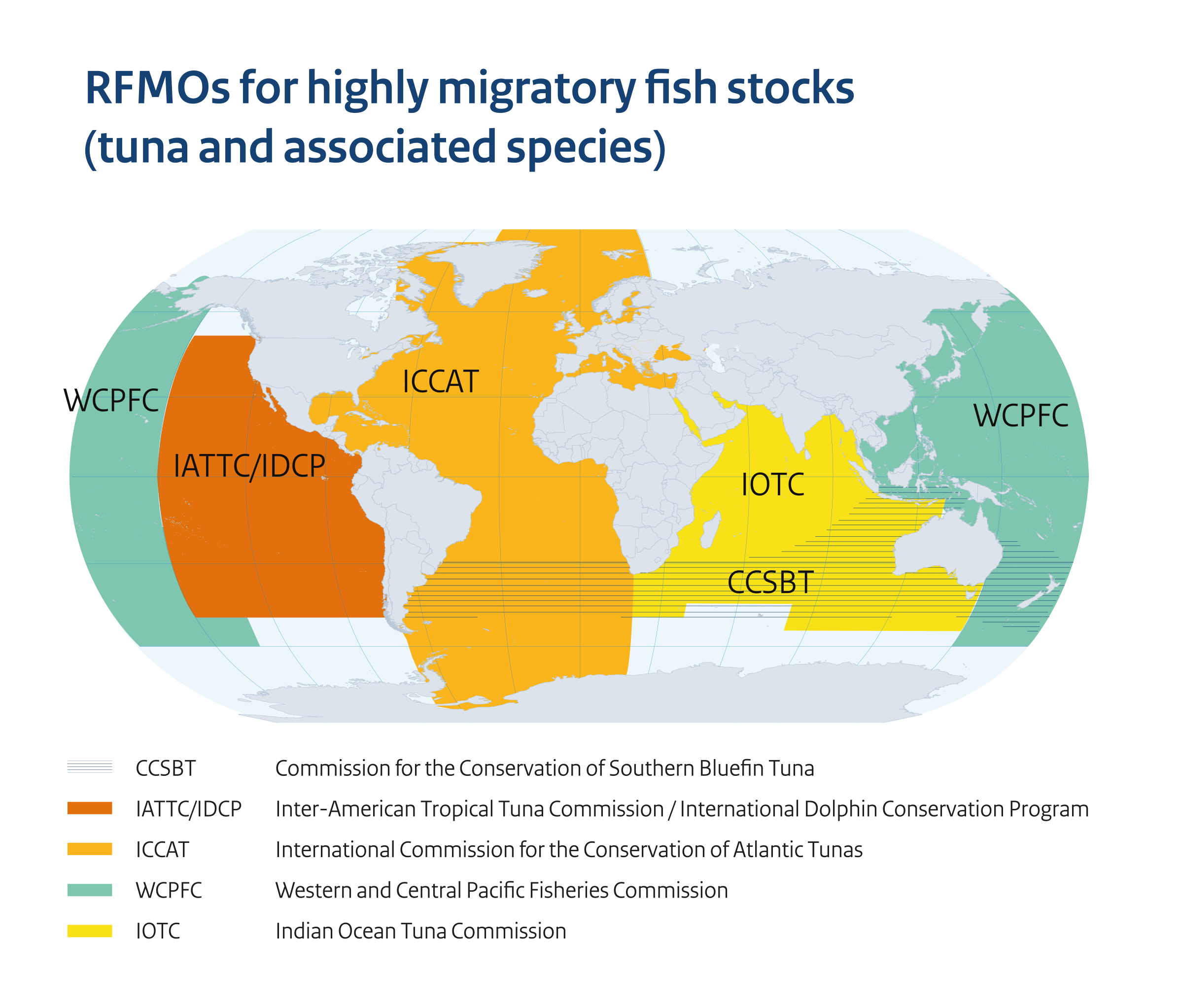
Caption
Caption
RFMOs for highly migratory fish stocks (tuna and associated species)
CCSBT: Commission for the Conservation of Southern Bluefin Tuna
IATTC/IDCP: Inter-American Tropical Tuna Commission/International Dolphin Conservation Program
ICCAT: International Commission for the Conservation of Atlantic Tunas
WCPFC: Western and Central Pacific Fisheries Commission
IOTC: Indian Ocean Tuna Commission
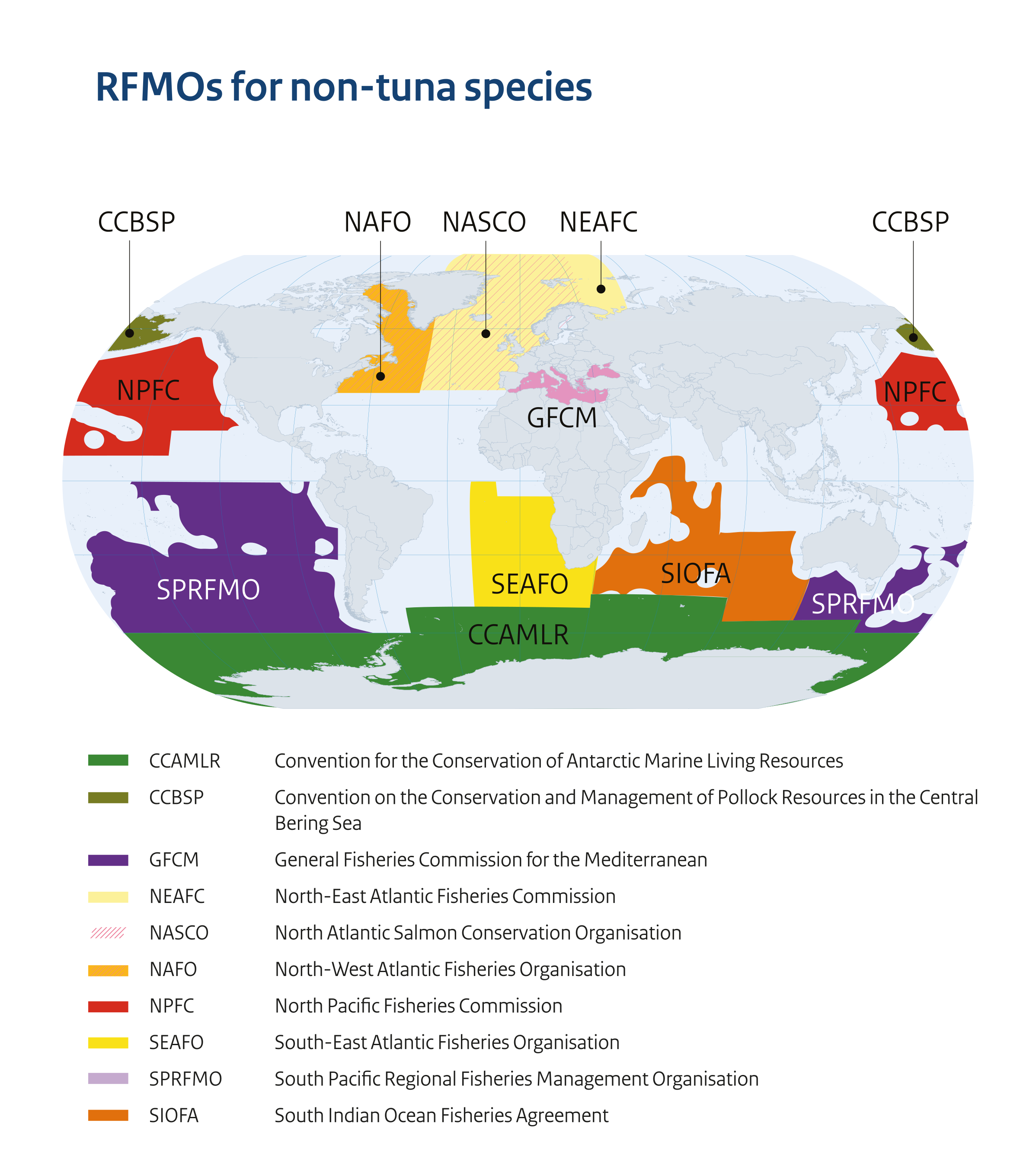
Caption
Caption
RFMOs for Non-Tuna Species
CCAMLR: Convention for the Conservation for Antartic Marine Living Resources
CCBSP: Convention on the Conservation and Management of Pollock Resources in the Central Bering Sea
GFCM: General Fisheries Commission for the Mediterranean
NEAFC: North-East Atlantic Fisheries Commission
NASCO: North Atlantic Salmon Conservation Organisation
NAFO: North-West Atlantic Fisheries Organisation
NPFC: North Pacific Fisheries Commission
SEAFO: South-East Atlantic Fisheries Organisation
SPRFMO: South Pacific Regional Fisheries Management Organisation
SIOFA: South Indian Ocean Fisheries Agreement
Laws and regulations
- Ministry of Agriculture, Fisheries, Food Security and Nature
Featured

View more

Read more
Learn more