Temporary Subsidy Scheme for Aviation in Transition (LiT): Supporting Research Module
The content of this page has been checked on 21 October 2026
Are you a knowledge institution that would like to contribute to making aviation more sustainable, particularly through the development of technology for cleaner aircraft? If you have a research project that supports this objective, you may be eligible for a subsidy under the Temporary Subsidy Scheme for Aviation in Transition (LiT) for your research.
Application period
Subsidy height
The maximum subsidy height will be:
- 100% of the eligible costs for fundamental research;
- 50% of the eligible costs for industrial research;
- 25% of the eligible costs for experimental development;
- € 1,250,000 for each research project.
Explanation of the research
Knowledge issues
Knowledge issues
In the supporting research module, we focus on technology for which industry currently has no direct demand, but knowledge institutions expect to see demand for this technology in the future.
The expertise generated by these projects will enable companies to strengthen their position in the international supply chain up to 2030 and beyond. In this way, the subsidy contributes to a stronger Dutch economy.
The knowledge issues can be divided into 2 areas of expertise:
- smart structural components
- enabling hydrogen-powered flight
Smart structural components
Smart structural components
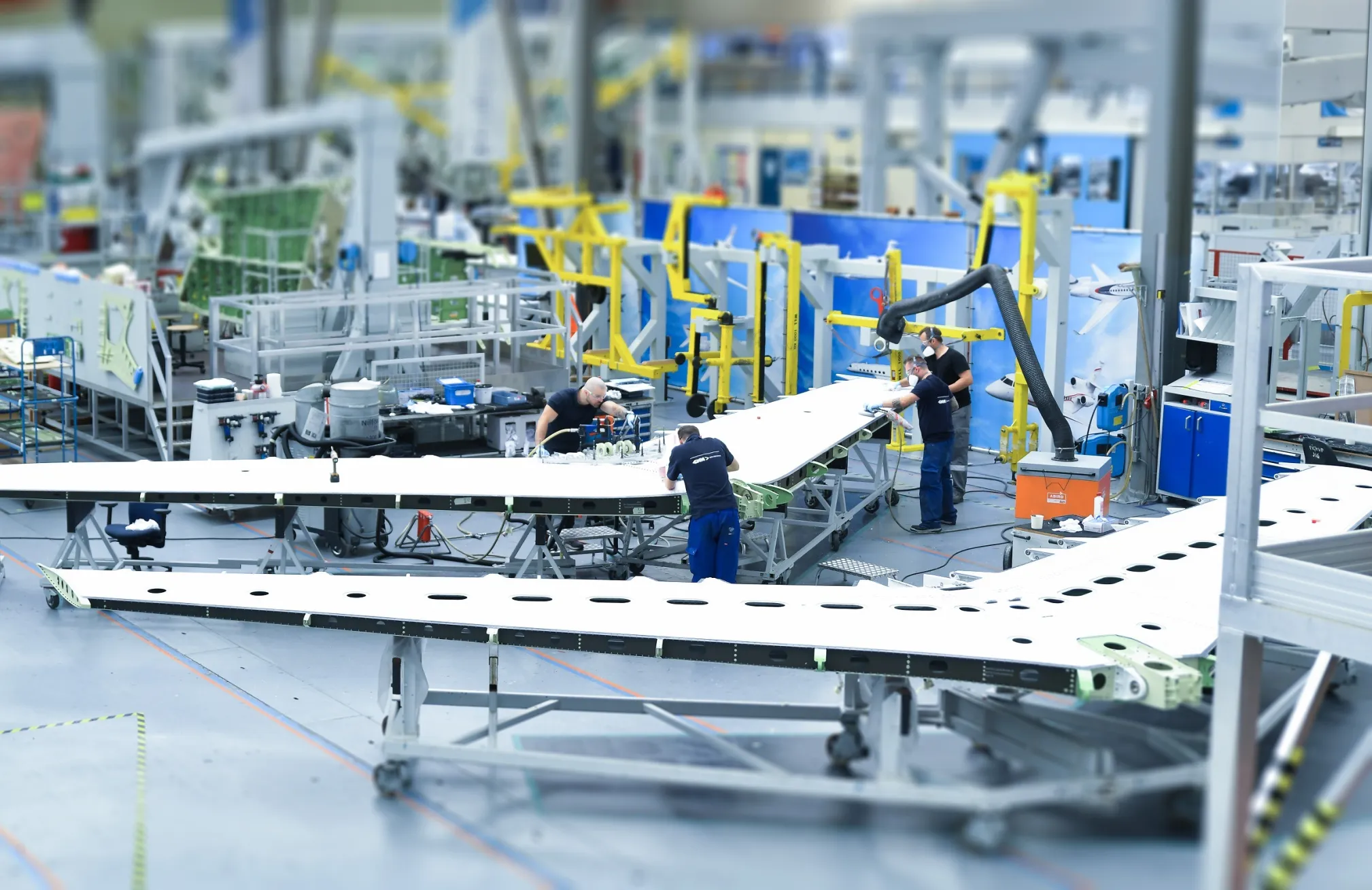
Smart structural components improve flight efficiency. To achieve this, the next generation of structural components must be intelligently controlled. They must also be able to adapt to changing conditions. This is particularly suitable for components such as wings and flaps; examples include:
- New smart and environmentally friendly composite materials and the manufacturing methods.
- Smart control of structural components using artificial intelligence, sensing and control systems, and self-powered sensors manufactured using sustainable printing methods.
- Best possible long-term behaviour of aircraft components capable of changing shape, such as wings (morphing control surfaces). This is achieved using design methods for thin-walled structures that are often subjected to high loads or changing conditions (cyclic deformations).
- Integration, diversification, and certification and maintenance of the new generation structural components. Certification based on existing regulations is not feasible for a system based on artificial intelligence. A new certification method will need to be established.
- Recycling of composite parts, thermosetting plastics and thermoplastics.
Enabling hydrogen-powered flight
Enabling hydrogen-powered flight
Removing technical obstacles to hydrogen-powered flight requires using hydrogen at very low temperatures (cryogenic hydrogen) and under pressure. To this end, a pressurised cryogenic hydrogen tank with high storage efficiency must be developed that meets aviation safety requirements. It must continue to meet these requirements throughout its entire service life. However, the powertrain and the fuel cell also require further research. Research on:
- Hydrogen-tight composites that use knowledge from membrane technology
- Material behaviour and properties during and after prolonged exposure to cryogenic temperatures
- Design methodologies and new manufacturing methods
- Thermal management at aircraft level
- Safe refuelling and the prevention of condensation and ice formation at the tank inlet and outlet
- The behaviour of the system at cryogenic temperatures
- Hydrogen combustion in aircraft engines
- Hydrogen fuel cells for aviation
- Effective power management through smart energy recovery
- Powertrain design and development for hybrid-electric propulsion
- Development of safety and certification through innovative technologies and processes
- Research and development on the best possible propellers for hybrid-electric propulsion systems
- Research and development on modular hybrid-electric aircraft retrofits
Conditions
Your project must meet the following criteria:
- The knowledge institution must apply for the subsidy. The institution collaborates with other institutions or companies established in the Netherlands. Collaboration with companies is not mandatory. If you work together with other parties, the knowledge institution is always the main applicant.
- The activities focus on research and development projects aimed at:
- smart structural components; or
- hydrogen-powered flight.
- You must start the project within 13 weeks of approval of the subsidy application.
- A project in the Supporting Research Module must be completed within 5 years of the project start date.
- The maximum amount for each research project is € 1,250,000.
Please note: You cannot apply for a subsidy for the development of sustainable fuels and technology aimed at operational activities. This is because it is not covered by the Aviation in Transition Growth Fund programme.
Ranking criteria
The Supporting Research Module is a call for subsidy tender. We will assess the applications based on various criteria. The available budget will be allocated by ranking the applications. A project scores higher and ranks better if:
- the project contributes more to the objective of the scheme;
- the project contributes more to achieving the 2030 climate goals, as set out in the Climate Agreement;
- the level of scientific excellence is higher;
- the contribution to the Dutch economy is greater;
- the quality of the project is higher. This must be demonstrated by defining the approach and methodology, risk management, feasibility, the collaboration and the participating parties.
After your application
In a call for subsidy tender, we assess your application after the closing date based on qualitative ranking criteria. The order in which applications are submitted will not affect the assessment. You will receive a subsidy decision setting out the assessment of your project within 13 weeks of the closing date. If the decision is positive, you will receive a decision containing information about the payment of the subsidy and your obligations as a subsidy recipient. The main applicant is responsible for transferring the subsidy funds to the other participants.
After your decision
You will have various obligations during the project:
Advance payment
Advance payment
If you have been granted a subsidy, you will get an advance payment of 80% of the subsidy height. We will pay this advance payment in a single instalment to the main applicant. The subsidy decision (our decision regarding your subsidy) will state when you will receive the funds. The main applicant will receive all the subsidy funds; the main applicant will transfer the funds to the other participants.
Progress report
Progress report
For some projects, you will be required to report on the progress of the project. This will depend on the duration of your project:
- You must submit a progress report 12 months after the start date of the project.
- You must submit a progress report every year.
Reporting changes
Reporting changes
If you wish to make a change to your project’s plan or budget, please report this immediately. If you fail to report a change, we may demand repayment of all or part of your subsidy.
How to report a change:
- Log in using eRecognition 3.
- Go to your dossier and select ‘Change’.
You will receive a decision about your change within 8 weeks. If you changed the end date, the change will be implemented immediately. You can find the new end date in your dossier. You will not be notified about this.
Applying for final approval
Applying for final approval
If you have completed a project, you must apply for final approval of your subsidy. You can do so using the Final Report form. You must apply for final approval within 13 weeks of completing your project.
If your subsidy height is € 125,000 or more, you must also include an accountant’s audit report. If you completed your project before the end date and wish to get final approval for the subsidy earlier, you must first submit a request for a change. The end date of your project can then be brought forward.
Once this change has been approved, you can apply for final approval of your subsidy. Be sure to include a final report of the entire project with the application form.
Verification
Verification
We carry out random checks to verify that you have complied with the obligations for subsidy recipients. We may ask you to provide evidence of this. We can also ask you to prove that you have carried out the activities. If you have not complied with the obligations, we may reduce the subsidy height. We can also withdraw the subsidy entirely.
Outcome and ranking
The outcome of the previous call for subsidy tender for Supporting Research has been announced. A total of 16 proposals have been ranked. Four proposals will receive funding from the subsidy budget of € 5,250,000. You can find all the applications (in ranking order) in the download below.

Contact
If you have any questions or would like to receive information in English, please contact us by e-mail.
Programme goal
The expertise generated by these projects will enable companies to strengthen their position in the international supply chain up to 2030 and beyond. In this way, the subsidy contributes to a stronger Dutch economy. Furthermore, the projects must be instrumental in:
- the development of the knowledge base required to continue making aviation more sustainable and to transition to zero-emission flying even after the LiT programme has ended;
- strengthening the earning capacity of the Dutch aircraft manufacturing industry and possibly lead to Intellectual Property (IP) positions for the Dutch aviation sector.
More information
- Publication in Staatscourant (Government Gazette) (23 March 2026) - amendment scheme
- Publication in Staatscourant (Government Gazette) (6 May 2024) - with explanatory notes
- Ministry of Infrastructure and Water Management (I&W) Framework Decision: wetten.nl - Regulation – Framework Decision on subsidies for Ministry of Infrastructure and Water Management
- Ministry of Infrastructure and Water Management