Energy storage: invest in a battery for your business
The content of this page has been checked on 17 August 2026
Would you like to store electricity for your business? A battery can be a solution when you want to expand your business while the power grid is overloaded (grid congestion).
How can a battery help your business?
A battery can be useful in these situations:
- You want to expand your business or make it more sustainable, but grid congestion is preventing this.
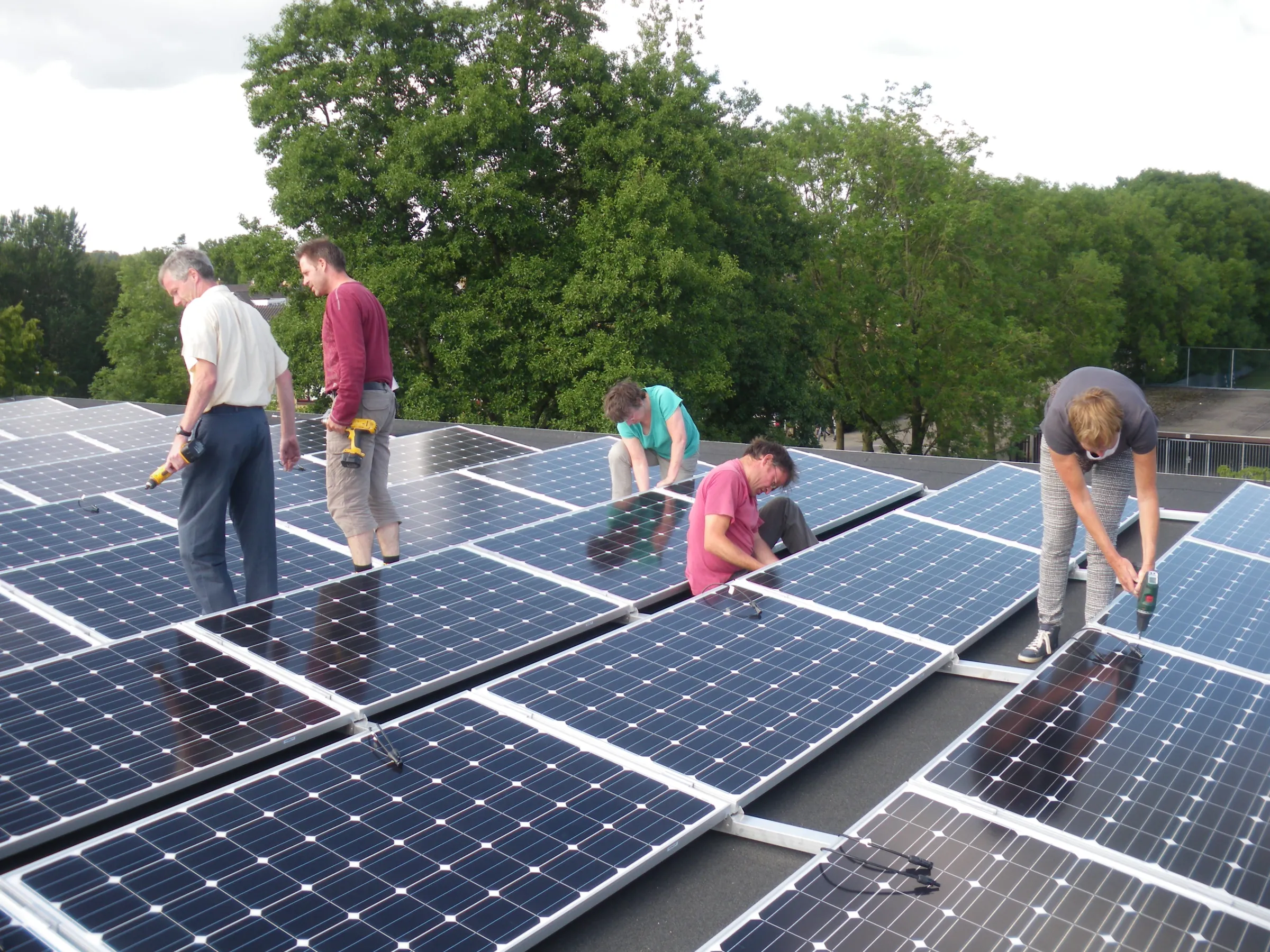
- You have an on-site generation facility. This can be solar panels or a wind turbine. A battery can improve the way you use the energy you generate.
- There are peaks in your energy consumption. With a battery, you consume less electricity at peak moments. This makes it possible to get a more affordable contract. This also frees up space on the power grid for other parties.
What steps can you take?
Would you like to know if a battery system is the right choice for you? Follow the steps below:
1. Analyse your energy consumption
Gain insight into your energy situation. Collect information about your energy consumption. Also collect information about your on-site power generation. Examine how much electricity you consume. Are there frequent peaks in your consumption? Also think about any future changes, such as possible future expansion, new machinery or extra charging stations.
An energy adviser can assist with your analysis and provide advice on appropriate measures. These may include measures other than battery storage. For example, energy management or energy saving.
2. Calculate your payback period
There are various ways in which you can use your battery to earn back the investment you made on it:
- Your battery will help to make your business more sustainable or to expand it, even with grid congestion in your region.
- You charge the battery with the energy generated on site. You later consume this electricity yourself. Or you sell it when electricity is scarce, for example because of a lack of wind or sunshine. Energy prices are often higher at these times. Some businesses trade on the energy market on their own. Many businesses prefer to hire a specialist for electricity trading.
- You can use your battery to reduce grid congestion via congestion management. This often includes a financial reward. Please note: if batteries are incorrectly configured or adjusted, they may cause or exacerbate grid congestion.
- Some grid operators offer a solution that combines a battery with an increase in your connection capacity. You can obtain this capacity increase in certain conditions. One example is Liander’s FlexPlus Battery for which you enter into a FlexPlus contract. This contract does not grant immediate priority on the waiting list. Read more about Liander's FlexPlus Battery
Investing in a battery can be expensive. The costs largely depend on the size of the battery. It is therefore important to calculate the payback period. Bear the following points in mind:
- The investment costs depend on your situation. How much power do you need? Do you have your own on-site generation facility? Discuss this with your energy adviser.
- You can earn money from a battery by trading on a range of energy markets. This means that the payback period will be uncertain, because of fluctuating electricity and trading prices.
- You can make use of subsidies and tax benefits. These are listed in the table below.
3. Check if you need a permit
Ask your local government if you need a permit. This depends on the location and size of the battery. It also depends on the impact on the surrounding area.
The permit requirements vary according to the location. Safety is a key factor. Batteries must be maintained and used responsibly. Rules have been set out for this in the Dutch PGS 37-1 guideline. This guideline may affect your permit. You will also need to inform your insurance provider that you intend to install a battery as they apply specific rules for battery safety.
The local municipality can also insist on measures to ensure the battery can be properly integrated in its surroundings. Think of screening with vegetation or ensuring sufficient distance from homes. Consider this before you develop your battery system.
4. Think about sustainability
Before investing in a battery, think about sustainability. Most batteries use critical raw materials, such as cobalt and lithium. Their extraction and processing often have a negative impact. This affects the environment, climate and people. It can lead to excessive water consumption, deforestation or poor working conditions. Alternatives for critical raw materials are being developed.
The European Union has also adopted the Batteries Regulation (EU 2023/1542). This regulation stipulates that businesses must reduce the environmental impact of batteries and reuse raw materials. It places certain obligations on battery producers, suppliers and importers. Examples of these include the battery passport and a collection and take-back obligation. These measures aim to improve the reuse of materials. Proper collection also prevents fires caused by old or damaged batteries. These fires can release harmful substances. In the Netherlands, there is a shared system for collecting and recycling large batteries.
5. Install and register your battery
Your first step will be to find a company to supply the battery. The Energy Storage NL association has a list of companies that can help you.
A battery must first be installed and tested. Once the battery is in operation, it will be carefully monitored. The battery will also be regularly inspected and maintained in order to ensure it continues working properly.
Register your battery system in time. If the power rating of your system is greater than 1 MW, you will need to register it 3 months prior to operation. For smaller systems, you are permitted to do this at a later time. This is your contribution to maintaining a safe and stable power grid. Read more about battery registration.
Carefully monitor your energy consumption. This will help you assess whether the measures are having an impact. You can then decide whether further action is needed to achieve a smarter energy supply.
Subsidy schemes and tax benefits
We have a range of schemes that may be financially beneficial for you. The most important schemes for batteries are listed in the table below.
| Subsidy scheme/tax benefit | What is the subsidy/tax benefit or? |
|---|---|
| Energy Investment Allowance (EIA) | Gain tax benefits on the purchase costs of your battery or other investment included on the Energy List. |
| Subsidy for flexible electricity consumption (Flex-e) | Subsidy for carrying out a flexibility scan, a feasibility study and/or flexibility measures. This will demonstrate how you can take a flexible approach to energy within your business. Battery storage is one potential option. |
| Public Charging Infrastructure Heavy Transport Subsidy Scheme (SPULA) | Subsidy for installing charging infrastructure for heavy-duty electric vehicles in a public location. The charging infrastructure may include a battery. |
| Private Charging Infrastructure at Businesses Subsidy Scheme (SPRILA) | Subsidy for installing charging infrastructure for electric vehicles on a privately-owned or leased site. The charging infrastructure may include a battery. |
| Market Introduction of Energy Innovations (MEI) in greenhouse horticulture | Subsidy for greenhouse horticulturalists for investment in innovative greenhouse systems or greenhouse energy systems that reduce carbon emissions. Battery storage can be part of the renewable energy technologies in the greenhouse energy system. |
| Subsidy Scheme for Clean and Zero Emission Construction Equipment (SSEB) – Purchase | Scheme designed to encourage the purchase of new, emission-free construction tools, auxiliary equipment and construction vehicles. Battery storage can be a part of the charging infrastructure for these tools or vehicles. |
| Subsidy Scheme for Sustainable Social Real Estate (DUMAVA) | Subsidy scheme that compensates owners for some of the costs of improving the sustainability of existing social real estate, such as energy storage. |
| Demonstration Energy Innovation (DEI+): energy and climate innovations | Subsidy for business owners and research organisations collaborating on pilot projects relating to energy flexibility (including energy storage). |
| Subsidy for battery-electric shipping in seaports | Subsidy for the purchase and installation of a battery system on seagoing vessels and shore-based charging infrastructure. |
The importance of energy storage
We aim to have a sustainable energy system. For this, electricity production will mainly come from renewable sources, such as wind and solar. This electricity production is weather dependent. This can mean that there is too much electricity at the same time. In that case, a mismatch between electricity production and demand can occur.
Batteries provide flexibility
More flexibility is needed to keep our energy supply stable. Storing electricity in batteries can be a part of the solution.
We commissioned research into using batteries to store electricity. What steps are required to realise battery projects? How much does it cost? And what factors accelerate or slow down the realisation of battery projects? You can read about the research results (in Dutch) in the reports on implementation of small-scale batteries (Implementatie kleinschalige batterijen) and implementation of large-scale batteries in the Netherlands report (Implementatie van grootschalige batterijen in Nederland).

Other forms of energy storage
There are also other forms of energy storage, including in molecules (such as hydrogen) and heat. Read all about converting electricity into other types of energy here (in Dutch).
- Ministry of Economic Affairs and Climate Policy
- Ministry of Economic Affairs and Climate Policy
Uitgelicht
Elektriciteitsnet overbelast?
Duurzame resultaten