How DRRS experts help turn waste into resources
The content of this page has been checked on 7 September 2026
In many remote refugee settlements, unmanaged waste creates risks for health and the environment. It can block drainage channels, cause flooding, kill livestock and create breeding grounds for mosquitoes and rodents. But waste material can also support local economies when treated as a resource.
Miriam Klinkenberg, a mechanical engineer with humanitarian and sustainability expertise, explored this potential during her latest Dutch Disaster Risk Reduction and Surge Support (DRRS) deployment. For 9 months, she supported the United Nations High Commissioner for Refugees (UNHCR). During this time, she did research from the Netherlands and visited settlements in Ethiopia, Chad and Mauritania to study the situation and find sustainable solutions. With her deployment coming to an end, pilot projects are ready to take off.
DRRS provides tailor-made technical support to humanitarian actors and foreign governments during all phases of a water-related disaster. In this case, RVO deployed Miriam along with Niels Lenderink, a water resource management specialist, to help UNHCR address a gap in its environmental strategy.
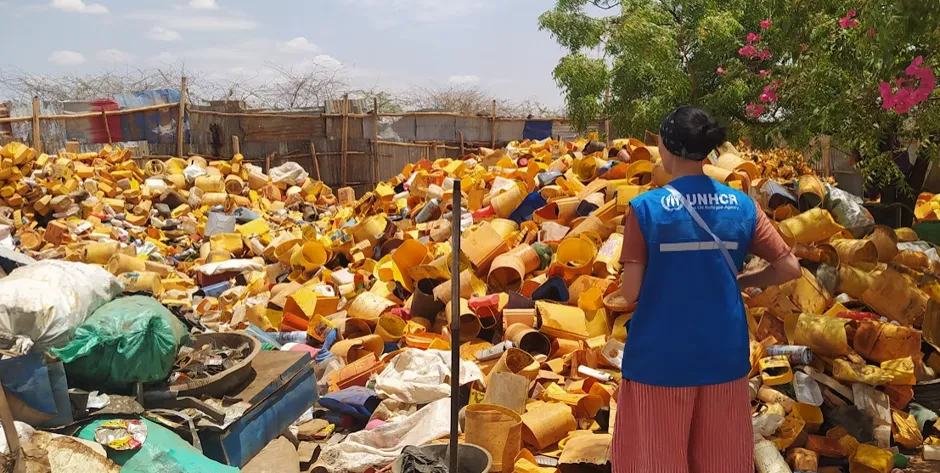
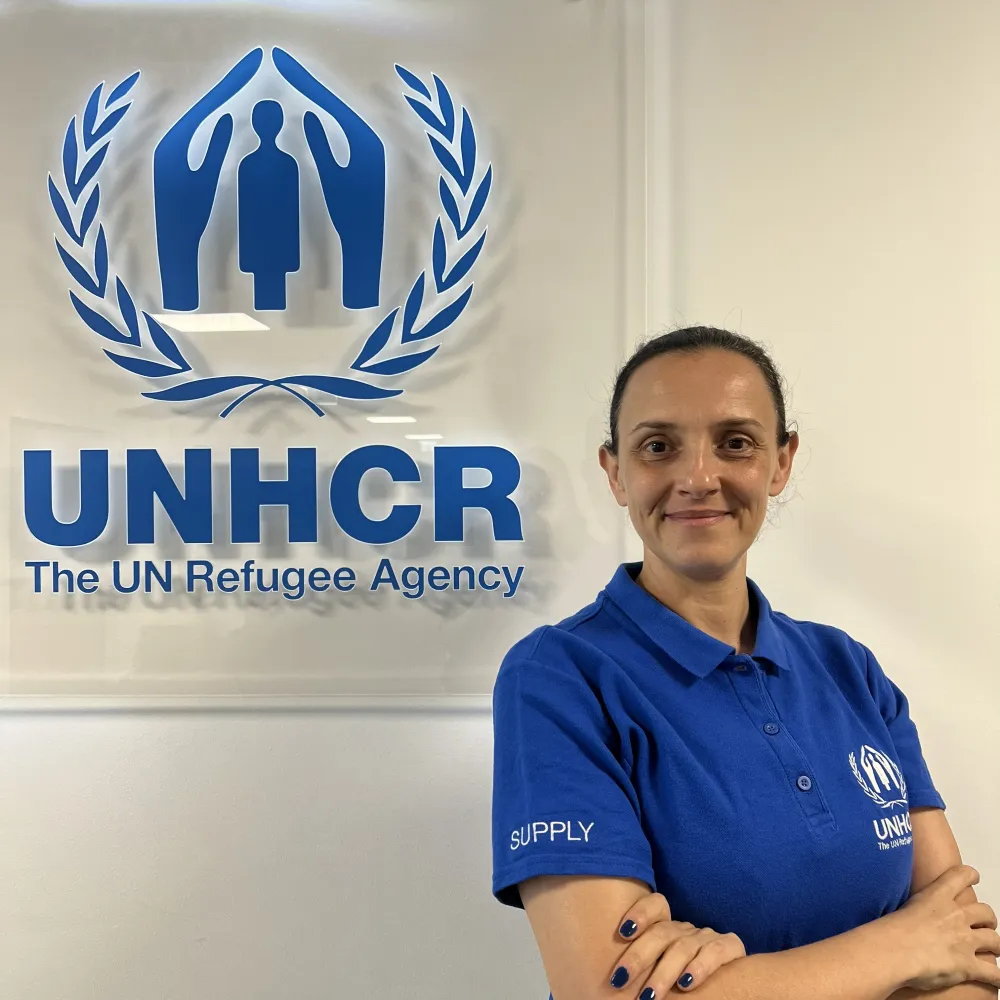
DRRS programme expert Miriam Klinkenberg on-site with UNHCR.
Managing waste in a humanitarian crisis
The UNHCR Supply Management Service manages the project. UNHCR has been working since 2022 to reduce the carbon footprint of its supply chain. Items provided by UNHCR to forcibly displaced people, such as plastic buckets, blankets and utensils, are now more sustainable than before. But the organisation also wanted to better understand what happens when those items are no longer usable. Valeria Dell’Aquila, an Associate Supply Officer at UNHCR who covers environmental sustainability, explains why they needed help.
"We distribute very large quantities of relief items, often in locations where formal waste-management systems are very limited," Valeria says. "We therefore wanted to understand the problem systematically, from an environmental perspective and an operational and economic one".
The relationship with RVO was an active partnership. Colleagues from the agency contributed ideas, networks and technical guidance throughout the process. Valeria says this approach is vital when a challenge does not fit into one single technical area.
Assessing challenging environments
The project focused on refugee settlements in eastern Chad, the Somali region of Ethiopia and south-eastern Mauritania. These areas represent some of the most difficult humanitarian environments. They are remote regions where displacement has continued for many years. In these locations, waste management systems are minimal or do not exist at all. UNHCR decided to use these locations as a baseline for piloting sustainable waste value chain solutions. A positive outcome in such challenging environments would allow UNHCR to take a similar approach elsewhere.
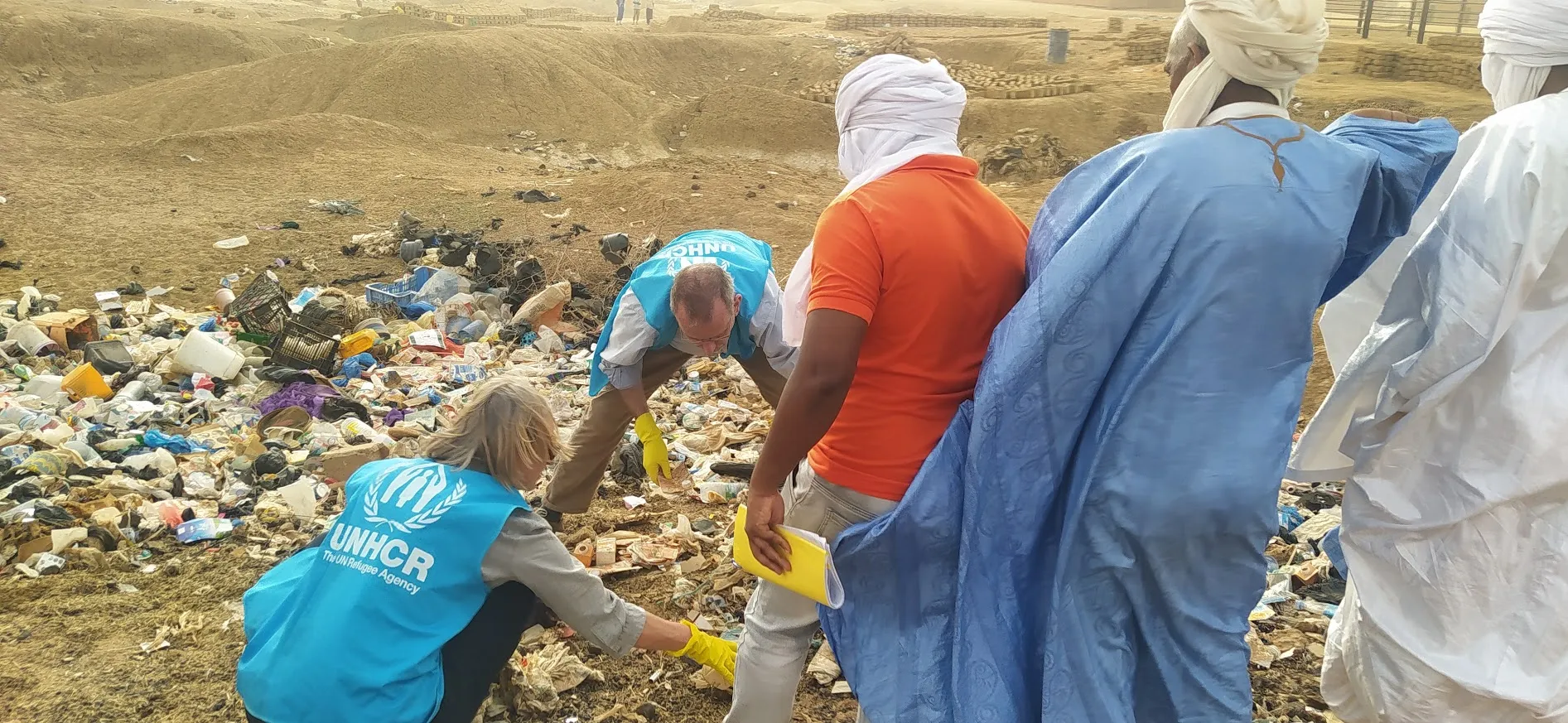
Miriam and Niels conducted detailed studies to see how materials move through these areas. Miriam saw the results of minimal waste management during her field visits. In the camps, animals often eat plastic waste. Because these animals are a primary investment for families, their death is a major economic loss. In Chad, where thousands of refugees are arriving from Sudan, Miriam found the amount of waste lying around to be shocking.
Still, people in the settlements were already seeking value in waste through informal practices. In Mauritania, Miriam met a private businessman collecting plastic bottles to sell across the border in Senegal. In Chad, the local Red Cross was already turning collected plastic into latrine slabs. Valeria notes that such existing practices are the basis for future work. "We need to understand those practices before designing solutions," she says.
Co-creation and the WISE CIRCLE
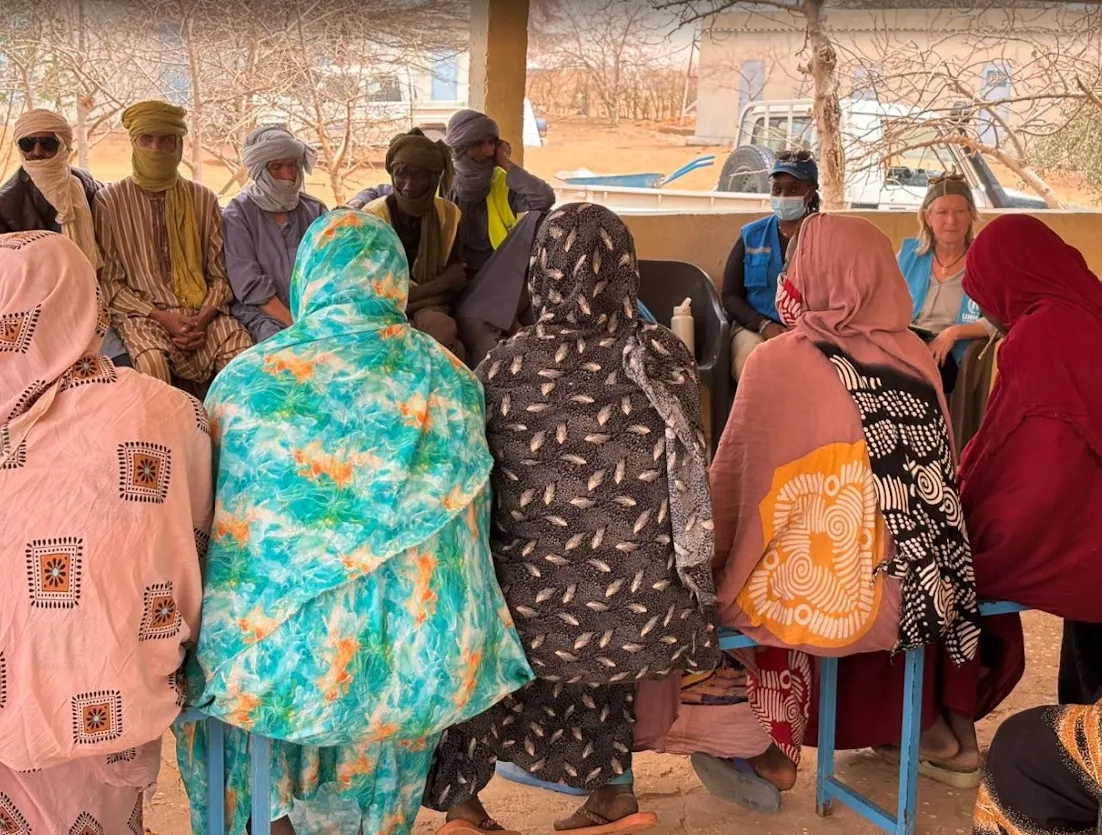
After the assessments, the project moved into a co-creation stage. The experts organised workshops in all 3 countries, bringing together humanitarian actors, local authorities, refugees, host community representatives and the private sector. Miriam found that although many organisations worked in the same country, they often did not know what others were doing. Through the workshops, they sat together and explored ways to better use and share resources.
The workshops confirmed how humanitarian organisations cannot solve waste management alone. They need communities, local authorities and the private sector to make the systems work. Building on this understanding, the workshops initiated the creation of the Waste Innovation for Sustainable Emergencies & Collaborative Initiative for Resource & Circular Economy (the WISE CIRCLE). This informal group comprises UNHCR, WFP, UNHRD, HULO and the Global Logistics Cluster/WREC Coalition working together to promote better coordination and resource sharing. The goal of WISE CIRCLE is to create national working groups on sustainable waste management working across sectors and clusters.
Connecting with the local economy
The deployment also showed that waste management must eventually connect with the local economy to be sustainable. The team identified several private businesses during their missions. In Ethiopia, an informal market already collects certain plastics and sends them to Addis Ababa for recycling. The project aims to create a self-propelling business model. In the past, humanitarian groups often paid wages for waste collection. When the funding stopped, the cleaning stopped. The new model aims to connect refugee workers with local economies so they can earn an income by developing financially sustainable business models.
The programme seeks ways to connect international technology with local needs. The team is also working to connect interested Finnish private companies with the local private sector in Chad for technological knowledge exchange. Instead of bringing in high-tech systems that might not work in remote settlements, the focus is on working together to improve solutions that already exist in Chad.
Implementation and future goals
The DRRS deployment of Miriam and Niels ended in August 2026. However, the project will continue. UNHCR has recruited Miriam to stay on as implementation manager starting in September. She will work with the country teams to start the pilot stage. The upcoming pilots will test specific solutions. In Mauritania and Ethiopia, the team is exploring the use of innovative UNHRD solutions (containerised 'mini factories') to recover waste. Settlement residents can use the units to turn plastic waste into useful items such as construction materials that they can sell at a profit.
The long-term goal is to move from managing waste to preventing it entirely. "Waste management is actually avoiding waste for me more than anything else," says Miriam. "It should be part of the process from the beginning: When you bring something in, how do you get it out?" Valeria also believes this way of thinking must be built into every humanitarian response from day 1. "Humanitarian interventions need to be designed from the outset with that long-term in mind, so that what we put in place during the emergency makes it easier for other actors to build on it later," she says.
Sign up as an expert
Are you an expert on waste management, water management, water safety or water supply? Would you like to help prevent or reduce the impact of water-related disasters worldwide? DRRS is always seeking experts, so consider signing up as one in our database.
Sign up as a DRRS expert Sign up as a non-Dutch DRRS expert
The database will store your CV and contact details. You will receive information on our deployments and training opportunities. Registering will only take a few minutes.
For more information on the DRRS programme, see the DRRS webpage.
- Ministry of Foreign Affairs