Where humanitarian action meets long-term water security
The content of this page has been checked on 7 January 2026
In northern Côte d'Ivoire, water is essential for daily life. Rosine Kouame, an Ivorian water management expert with the Dutch Disaster Risk Reduction and Surge Support (DRRS) programme, led a team to address urgent local water needs while creating sustainable improvements for the community.
Rosine's goal of the deployment focused on promoting peace and sustainability in the region affected by migration and climate change. She explains, "Many people came from neighbouring countries such as Burkina Faso, fleeing conflict. These circumstances created a shortage of water, which led to tension within communities." To tackle these issues, Rosine focused on 3 main goals. First, collecting technical data on the available water supplies. Second, establishing a coordination structure to improve cooperation among organisations. And third, providing practical support for projects, such as installing water pumps and forming local management groups.
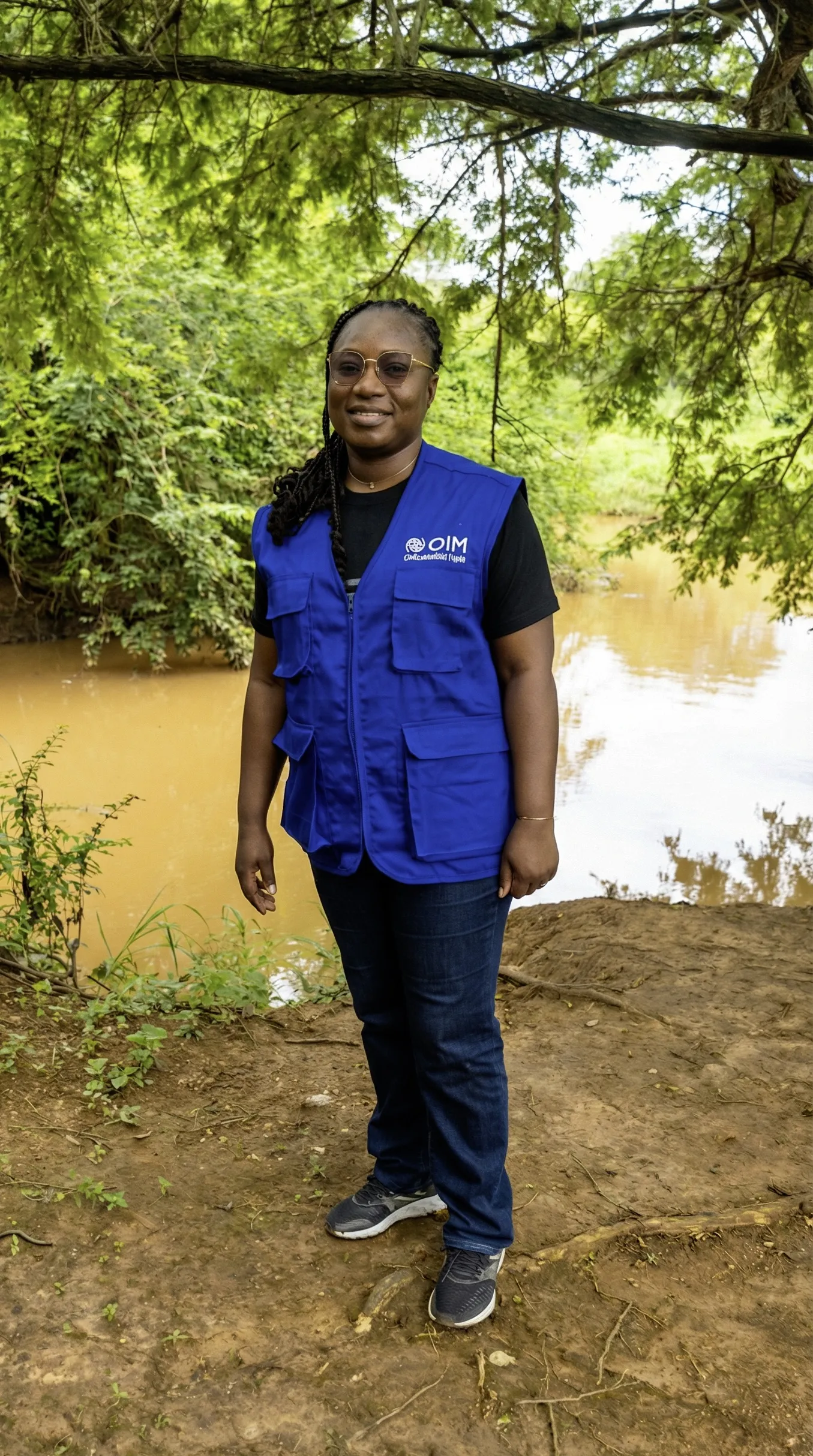
Rosine Kouame, water management expert with the DRRS programme
The added value of a local DRRS expert
David Preux, Chef de Mission for the International Organization for Migration (IOM) in Côte d'Ivoire, highlights Rosine's role in their work. IOM uses Integrated Water Resources Management (IWRM) to ensure sustainable water use aiming to reduce tensions, improve access and address climate change in vulnerable regions. Recently, David requested Rosine's specific IWRM expertise. He shares his perspective on working with a DRRS professional with local knowledge.
"As an expert, Rosine significantly improved our water infrastructure design and construction monitoring at the community level. Her expertise in social engineering and stakeholder engagement was invaluable.
As an Ivorian, Rosine understands the local institutional dynamics, the cultural nuances and national priorities. This quality proved a significant asset, enabling her to bridge the gap between international standards and practical realities while factoring in historic efforts and structural barriers. Her approach led to a smoother engagement with national partners, including ministries, decentralised organisations and local water stakeholders."
As a woman, Rosine recognised her unique advantages in water management. She notes, "In our society, these jobs are rarely considered for a woman. My presence opened doors. The women in the villages were more open to sharing their needs and ideas with me, which helped involve them in the projects. Since women play a crucial role in daily water use but often lack a voice in decisions, involving them in committees provided valuable insights."
Humanitarian aid versus development support
David states, "Humanitarian aid requires immediate action, while development efforts focus on long-term solutions and resilience. We should connect these efforts, such as involving the National Water Program (a government entity) in Côte d'Ivoire, when planning projects in the North. Instead of single-use facilities like water points, we should create multi-purpose structures for greater benefits. Balancing humanitarian aid with development support is a constant balancing act."
Short-term solutions versus long-term prevention
David continues, "When Integrated Water Resources Management (IWRM) is the starting point, the focus shifts from combating symptoms to tackling structural causes of vulnerability and migration. This approach emphasises collaboration between governments and communities for sustainable long-term solutions. The main obstacles often include limited coordination, short funding cycles and competing priorities. The DRRS initiative, along with Rosine, has facilitated dialogue among groups and enhanced the national capacity of the national water platform to sustain interventions beyond the project timeline. Shifting from short-term fixes to long-term prevention takes time, data and trust."
Rosine, as an IWRM specialist, emphasises the importance of the humanitarian–development nexus in water management. "Finding the balance is easier than many think. Humanitarian aid meets urgent needs by installing water facilities for immediate use. These structures remain in place, but for them to last, you need solid organisation and the right skills within the community. Humanitarian action can lead to sustainable development if capacity building and long-term planning are prioritised and integrated from the start."
Shifting from short-term solutions to long-term prevention, however, requires more than infrastructure; it also requires a comprehensive approach. Rosine explains, "Awareness is fundamental, as poor water point use can lead to pollution, disease and damaged equipment. Many projects end prematurely, often lacking proper follow-up and long-term funding support. Budgets often prioritise infrastructure over community training. To strengthen this connection, we need to focus on long-term engagement, improved management systems, and investment in local capacity to maintain safe and functional water systems for the community."
From conventional message to visionary approach
David explains that the most challenging aspect when shifting from conventional methods to a new vision is coordinating between institutions and agencies. It takes continuous facilitation to align various ministries and partners around a shared vision on IWRM. Rosine played a crucial role in ensuring consistent communication and follow-up with all parties involved. This approach has proved and continues to prove critical for maintaining progress. We are promoting IWRM in Côte d'Ivoire, but it is challenging to turn strategic ideas from the initial scoping missions into actionable plans. By refining our project proposals, we aim to transition from short-term efforts to more organised and strategic support."
The strength of a good partnership
David explains that the partnership with Rosine came from IOM and RVO's desire to boost local knowledge and ownership in IWRM. RVO's service through the DRRS initiative enabled them to include a skilled Ivorian professional in IOM's operations. This approach helped us match external technical assistance with local needs, ensuring that project results were relevant and sustainable.
Working with the RVO DRRS team has been exemplary. Their engagement went beyond funding; they offered a true technical partnership and adapted to our national context. Also, they helped Rosine in enhancing her IWRM expertise by connecting her with an IWRM expert in the Netherlands, making her an even more skilled expert. This collaboration fostered innovation and strengthened IOM's role in Côte d'Ivoire's national development priorities, serving as a model for excellent and effective, locally anchored cooperation between a government agency and an implementing agency."
More information
The number of weather, climate and water-related disasters has increased fivefold in the past 50 years. Extreme weather events are intensifying, affecting vulnerable communities. It is essential to shift the humanitarian sector from immediate disaster response to readiness and resilience by sharing knowledge from the development sector. You can contribute to this approach by signing up as an expert.
For more information on the DRRS programme, see the DRRS webpage.
Sign up as an expert
Are you an expert on water management, water safety or water supply? Would you like to help prevent or reduce the impact of water-related disasters worldwide? DRRS is always seeking experts, so consider signing up as one in our database. We are also interested in expertise on water topics with a more social approach toward inclusiveness.
Sign up as a DRRS expert Sign up as a non-Dutch DRRS expert
The database will store your CV and contact details. You will receive information on our deployments and training opportunities. Registering will only take a few minutes.
- Ministry of Foreign Affairs
- Ministry of Infrastructure and Water Management